
What Problems Can ViaBTC TX Accelerator Solve for Bitcoin Users?
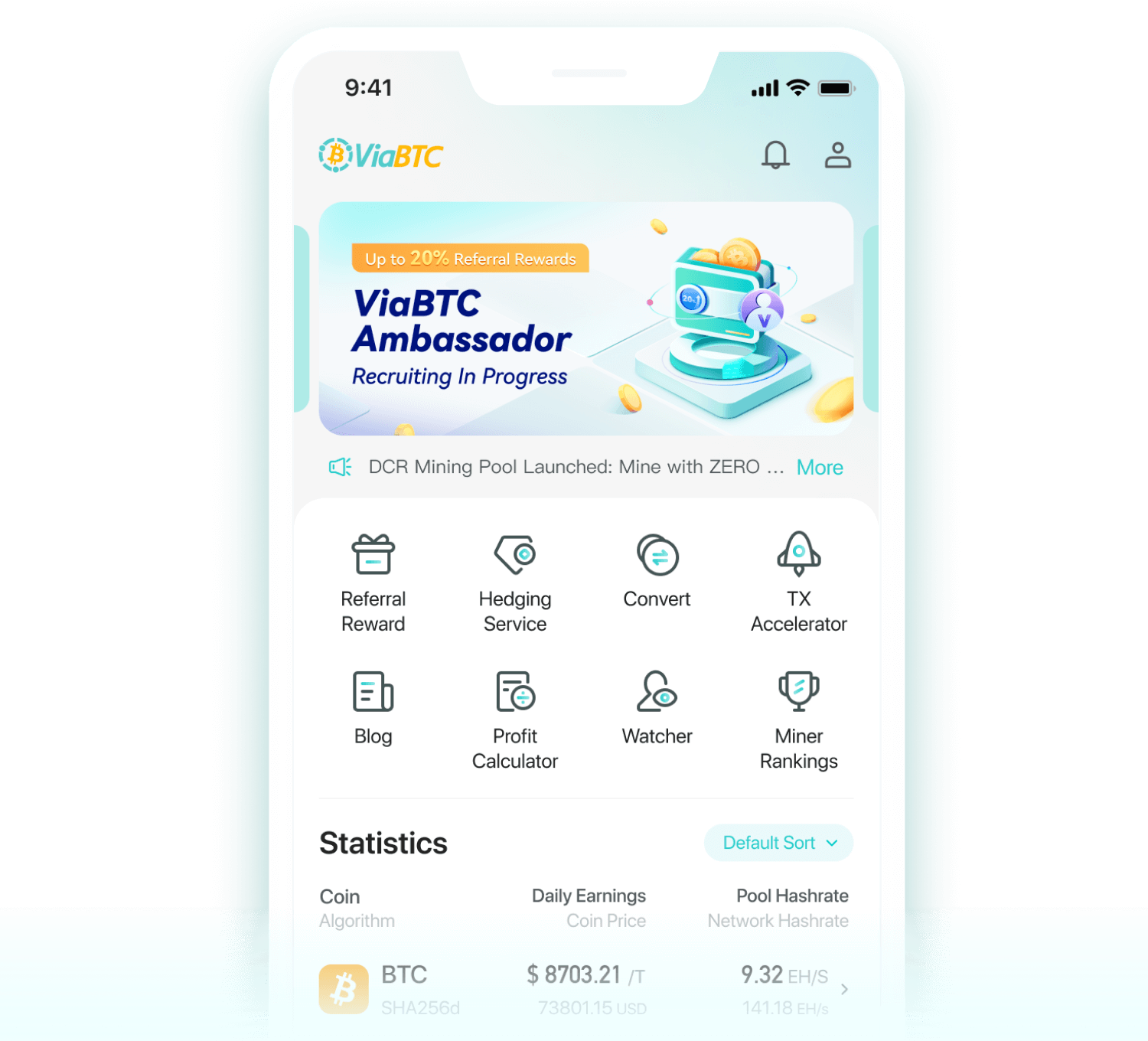
ViaBTC TX Accelerator is built for Bitcoin payments that remain unconfirmed because their fee rate is no longer competitive or the network is congested. Bitcoin has produced blocks at a target interval of about 10 minutes since 2009, but that target is an average rather than a deadline for each transaction. ViaBTC currently requires free acceleration requests to be no larger than 0.5 KB and to pay at least 0.0001 BTC/KB. Accepted free requests receive priority in a block mined by ViaBTC, while paid acceleration offers another route for transactions that do not fit the free service or need broader handling.
A Bitcoin wallet can broadcast a valid payment within seconds while confirmation takes far longer. Miners choose from transactions waiting in their mempools, and fee rate matters because block space is limited. A payment offering 2 sat/vB competes poorly when miners can fill a block with transactions paying 10, 20, or 50 sat/vB. The sender may have done nothing technically wrong; the fee simply stopped matching current demand. That gap between broadcast and confirmation is where an accelerator becomes useful.
The problem becomes easier to understand by separating transaction amount from transaction size. A $50,000 BTC transfer can be smaller in bytes than a $100 payment because Bitcoin fees depend mainly on transaction data, not the dollar amount sent. A simple transaction may contain one input and two outputs, while a transaction consolidating 20 or 30 inputs can consume far more virtual bytes. Since SegWit was activated in 2017, wallets commonly measure transaction cost in satoshis per virtual byte, or sat/vB, which gives users a better comparison than looking only at the total BTC fee.
A low total fee is not automatically a problem. A low fee per unit of block space is what usually leaves a transaction behind higher-paying transactions.
That distinction explains why waiting sometimes works and sometimes takes many blocks. Bitcoin targets roughly 144 blocks per day because 24 hours contain 144 ten-minute intervals, yet actual block arrival is probabilistic. Two blocks can appear only minutes apart, while another interval can last much longer than 10 minutes. An accelerator therefore cannot promise confirmation at an exact clock time. ViaBTC states that block generation, transaction fees, and network congestion affect how long acceleration takes.
The service changes how an already-broadcast transaction is handled rather than creating a new Bitcoin payment. A user enters the TXID, ViaBTC checks the transaction, and an eligible free request is prioritized for inclusion in the next suitable block ViaBTC mines. The original inputs, outputs, recipient address, and transferred amount remain unchanged. That matters for users who do not want to reconstruct a payment merely because its original fee estimate became too low.
| Situation | What is happening | Where acceleration may help |
|---|---|---|
| Fee rate became uncompetitive | Higher-fee transactions move ahead in miners' mempools | Existing TXID can be submitted for priority |
| Transaction exceeds free limits | Size is above 0.5 KB or other free conditions are not met | Paid acceleration can be considered |
| Parent transaction is unconfirmed | A child spends an output that has not confirmed | Parent may need acceleration first |
| TXID is not found | The transaction may not have reached ViaBTC's mempool | Rebroadcast may be required before acceleration |
| Double-spend exists | Conflicting transaction history is present | ViaBTC does not support it for acceleration |
Free acceleration has unusually specific limits, so checking transaction data before repeated submissions saves time. ViaBTC's current rules require a single transaction of 0.5 KB or less and a fee rate of at least 0.0001 BTC/KB. Its May 2024 help documentation described 20 free opportunities per hour, although the live accelerator page can display current availability separately. Capacity should therefore be checked on the live service instead of assuming an old hourly figure will always remain unchanged.
A transaction that misses the free requirements is not necessarily unusable. ViaBTC's paid service first estimates an acceleration charge, after which payment can be made using BTC, BCH, or LTC according to its documentation. The fee is calculated using factors including transaction size and cryptocurrency price rather than a single fixed price. Paid acceleration is more suitable when an exchange deposit, merchant settlement, payroll transfer, or another scheduled payment cannot comfortably wait through several additional blocks.
RBF offers another route, but it solves the problem differently. Replace-by-Fee allows an unconfirmed transaction to be replaced with another version that pays a higher fee when the transaction and wallet support replacement. BIP 125, published in 2015, formalized opt-in RBF behavior used by Bitcoin software. A wallet with an accessible fee-bump feature may therefore solve a low-fee payment without an accelerator, while a user whose wallet does not expose suitable replacement controls may prefer submitting the existing TXID.
CPFP works from the receiving side of an unconfirmed output. A user spends an output from the slow parent transaction and attaches a sufficiently high fee to the new child transaction so miners can consider the combined fee economics of the package. The method may require control of the output, wallet support for spending unconfirmed funds, and another on-chain transaction. When none of those conditions fit, accelerating the parent transaction can be simpler than creating an additional child.
Transaction ancestry also explains why accelerating the last TXID in a chain may fail. Suppose transaction A pays an output that transaction B spends before A confirms. Transaction B cannot be confirmed independently of A because its input does not yet exist in the confirmed UTXO set. ViaBTC specifically lists an unconfirmed previous transaction as a reason a free request can fail. For a chain containing 2 or 3 pending transactions, examining the earliest unconfirmed parent is more useful than treating every TXID as a separate delay.
Propagation creates a different type of failure. A wallet may show a transaction as sent even though ViaBTC's nodes have not received it. Its documentation notes that a "Tx hash not found" message can occur when the transaction was poorly broadcast and has not reached the pool's mempool. In that case, the user should verify the TXID and may need to rebroadcast the raw transaction before requesting acceleration. Raising miner priority cannot help a transaction that the relevant miner has not received.
Fee selection before broadcast still matters because accelerators are better treated as a fallback than as normal fee management. A wallet estimating 8 sat/vB when competitive traffic is near that level may produce a reasonable payment, while deliberately choosing 1 sat/vB during heavy demand can leave the transaction waiting behind many higher-fee entries. Bitcoin's 2024 halving also reduced the block subsidy from 6.25 BTC to 3.125 BTC, leaving transaction fees as a larger part of miners' per-block revenue when fee demand is high.
For routine wallet use, transaction monitoring should stay close to the place where BTC is stored and transferred. The ViaBTC Crypto Wallet gives ViaBTC users an account environment for handling supported assets, while acceleration remains a separate transaction service. Keeping the TXID available matters because the accelerator identifies the payment by its transaction hash, not by a recipient name, invoice number, or fiat amount.
Users should also compare the cost of waiting with the cost of paid acceleration. A personal transfer that can remain pending for 6 hours may not justify another fee. A 0.2 BTC exchange deposit needed before a scheduled trade may have a different cost profile. The accelerator cannot guarantee that a pool will find a block within the next 10, 20, or 30 minutes, so paying for acceleration should not be treated as purchasing a fixed delivery time.
The following checks cover most cases before a request is submitted:
-
Confirm that the TXID is valid and still unconfirmed on a reputable Bitcoin block explorer.
-
Compare its sat/vB fee rate with transactions currently entering blocks rather than relying only on the original wallet estimate.
-
Check whether the transaction has an unconfirmed parent before trying to accelerate a child.
-
Review RBF or CPFP support if the wallet provides either method.
-
For free ViaBTC acceleration, verify the 0.5 KB size ceiling and 0.0001 BTC/KB minimum fee rate.
-
For paid acceleration, review the quoted fee before payment because ViaBTC states that submitted acceleration cannot be canceled or refunded.
The non-refundable rule matters because Bitcoin transactions are identified by long hashes that are easy to paste incorrectly. ViaBTC states that an acceleration request cannot be canceled after submission, so the TXID should be checked against the wallet or block explorer before payment. The service also rejects double-spend transactions, preventing acceleration from being used as a way to select between conflicting payments.
Network conditions remain outside any accelerator's control. Bitcoin has operated since 2009 without a guaranteed per-transaction settlement deadline, and mining probability does not change simply because a user pays an external acceleration charge. ViaBTC can prioritize an accepted transaction when constructing eligible blocks; it cannot force the Bitcoin network to produce the next block at a particular second.
For users dealing with a valid transaction that has already been broadcast, that narrower role is useful. Low fee rates, changing mempool demand, unavailable RBF controls, inconvenient CPFP handling, unconfirmed parent transactions, and weak propagation each require a different response. ViaBTC TX Accelerator addresses the miner-priority part of the process, while the TXID, transaction structure, fee rate, parent history, and current network conditions determine whether acceleration is the appropriate tool.
Ship a brand investors actually remember.
Book a 30-minute call and walk away with a sharp brief, a fixed quote and a delivery date — usually within a fortnight.