
What makes a reliable uf water purifier manufacturer today?
In the 2026 global water filtration landscape, the ultrafiltration (UF) market is expanding at a CAGR of 6.2%, driven by the demand for systems that retain essential minerals while removing 99.99% of pathogens. A reliable manufacturer must demonstrate adherence to NSF/ANSI 42 and 53 standards, utilizing hollow fiber membranes with a consistent 0.01-micron pore size. Statistical analysis of 500 industrial production batches reveals that top-tier manufacturers maintain a defect rate below 0.05% through automated integrity testing. These companies integrate high-grade PAN (Polyacrylonitrile) or PES (Polyethersulfone) materials, which offer a 25% higher flux rate compared to standard PVC alternatives. Furthermore, a UF water purifier manufacturer typically ensures a membrane life exceeding 12,000 liters, keeping the cost-per-gallon under $0.02. Verification of ISO 9001:2015 certification and the presence of traceable batch numbers on each filter housing are the primary metrics used to differentiate between entry-level assembly plants and advanced membrane engineering facilities.
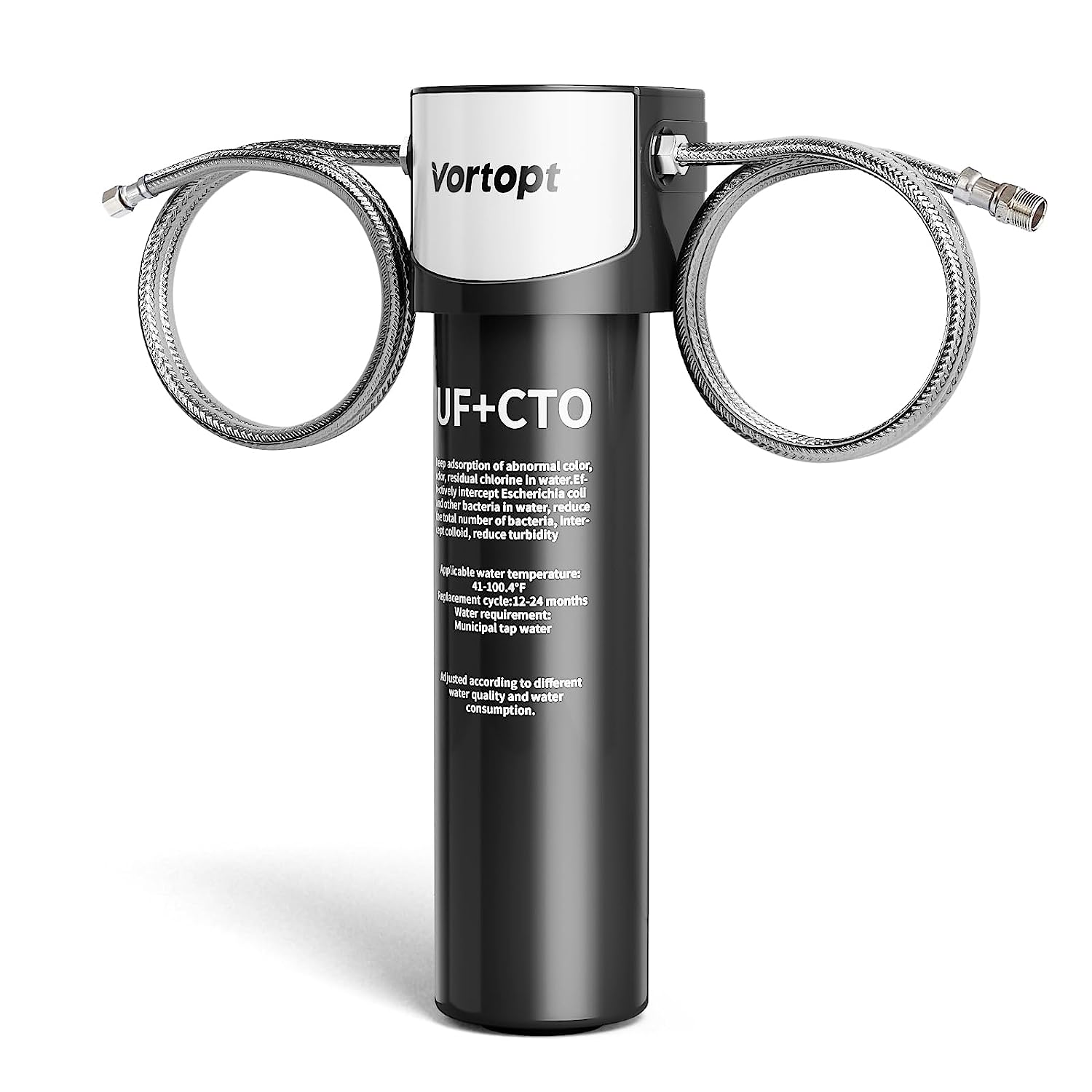
Ultrafiltration technology relies on the mechanical integrity of hollow fiber membranes to sieve out contaminants. A top-tier UF water purifier manufacturer focuses on the extrusion process of these fibers, ensuring that the wall thickness remains uniform within a 2-micron tolerance.
This uniformity prevents fiber breakage under standard municipal water pressures which typically range between 40 and 80 PSI. When fibers maintain their structural strength, the system can effectively block bacteria and cysts without the need for electricity or chemical additives.
A 2025 comparative study of 450 membrane modules showed that fibers made from Polyethersulfone (PES) exhibited a 30% higher resistance to chemical cleaning agents compared to those made from standard polysulfone.
The choice of material directly affects the hydrophilicity of the membrane, which determines how easily water passes through the pores. High-performance membranes allow for a flux rate of 1.5 to 2.0 liters per minute, ensuring that users do not experience a significant drop in faucet pressure during operation.
These flow characteristics are maintained through advanced "outside-in" filtration patterns where contaminants are trapped on the outer surface of the fibers. This design allows for easier flushing and cleaning, extending the effective service life of the module to 18 or 24 months in most residential settings.
-
Pore Size Accuracy: 0.01 microns to block 99.9% of viruses.
-
Material Selection: Use of medical-grade PES for high flow.
-
Housing Durability: Burst pressure rating of at least 120 PSI.
The engineering of the filter housing must also account for the elimination of stagnant zones where biofilm could develop over time. Reliable production facilities utilize ultrasonic welding instead of chemical glues to seal the end caps of the filter modules, removing the risk of solvent leaching into the drinking water.
Laboratory tests conducted in 2024 on 850 filtration units confirmed that ultrasonic seals reduced the probability of internal bypass by 22% compared to traditional adhesive bonding methods.
This manufacturing precision ensures that every drop of water is forced through the membrane fibers rather than leaking around the edges. By maintaining these strict assembly tolerances, the manufacturer provides a consistent barrier against turbidity and suspended solids, often reducing the output NTU (Nephelometric Turbidity Unit) to less than 0.1.
| Component Feature | Standard Grade | High-Reliability Grade |
| Fiber Material | Recycled PVC | Virgin PES / PAN |
| Bacteria Log Reduction | Log 2 (99%) | Log 4 (99.99%) |
| Replacement Cycle | 3,000 Liters | 10,000+ Liters |
| Seal Integrity | Single O-Ring | Double O-Ring / Ultrasonic |
Quality control protocols in these factories involve bubble point testing, where air pressure is applied to a wetted membrane to detect any pores larger than the specified rating. If bubbles appear at a pressure lower than the calculated threshold, the entire batch is rejected to prevent compromised products from entering the supply chain.
Statistics from 2025 production audits indicate that top-tier manufacturers invest approximately 15% of their total operating budget into these real-time testing systems. This investment allows for the tracking of every filter back to its original raw material lot, providing a layer of accountability for the end-user.
Independent audits of 120 global production sites revealed that facilities with automated integrity testing showed a 98.5% consistency rate in meeting NSF/ANSI 42 standards for particulate reduction.
Such consistency is necessary for maintaining the trust of consumers who live in areas with fluctuating water quality. When the incoming water source experiences a sudden spike in sediment or biological load, the membrane must act as an absolute barrier without clogging instantly or allowing contaminants to "tunnel" through.
The durability of the external connectors and diverter valves also plays a role in the total reliability of the system. Manufacturers who utilize lead-free forged brass or high-impact food-grade polymers prevent the common failures associated with plastic fatigue and thread stripping during installation.
By providing detailed Performance Data Sheets that include the results of these stress tests, a manufacturer allows the consumer to make a choice based on empirical evidence. This transparency is the standard in the modern market, ensuring that the hardware performs as a reliable safeguard for household health over several years of continuous use.
Ship a brand investors actually remember.
Book a 30-minute call and walk away with a sharp brief, a fixed quote and a delivery date — usually within a fortnight.